
Experian2023–2024
Auto Hub redesign
Turning years of visual and technical debt into a clean foundation, and getting two resistant teams to back it.
The situation
Experian's Auto Hub was carrying both visual and technical debt. Legacy components had drifted from the evolving design system, and the underlying architecture made every update expensive. Everyone felt it: users saw inconsistency, engineers dreaded touching the codebase, and product couldn't justify prioritizing it.
It was a known problem with no clear owner. I made it mine, and set out to bring two resistant teams with me.
The argument
The cost nobody counted
- 01
The visible problem
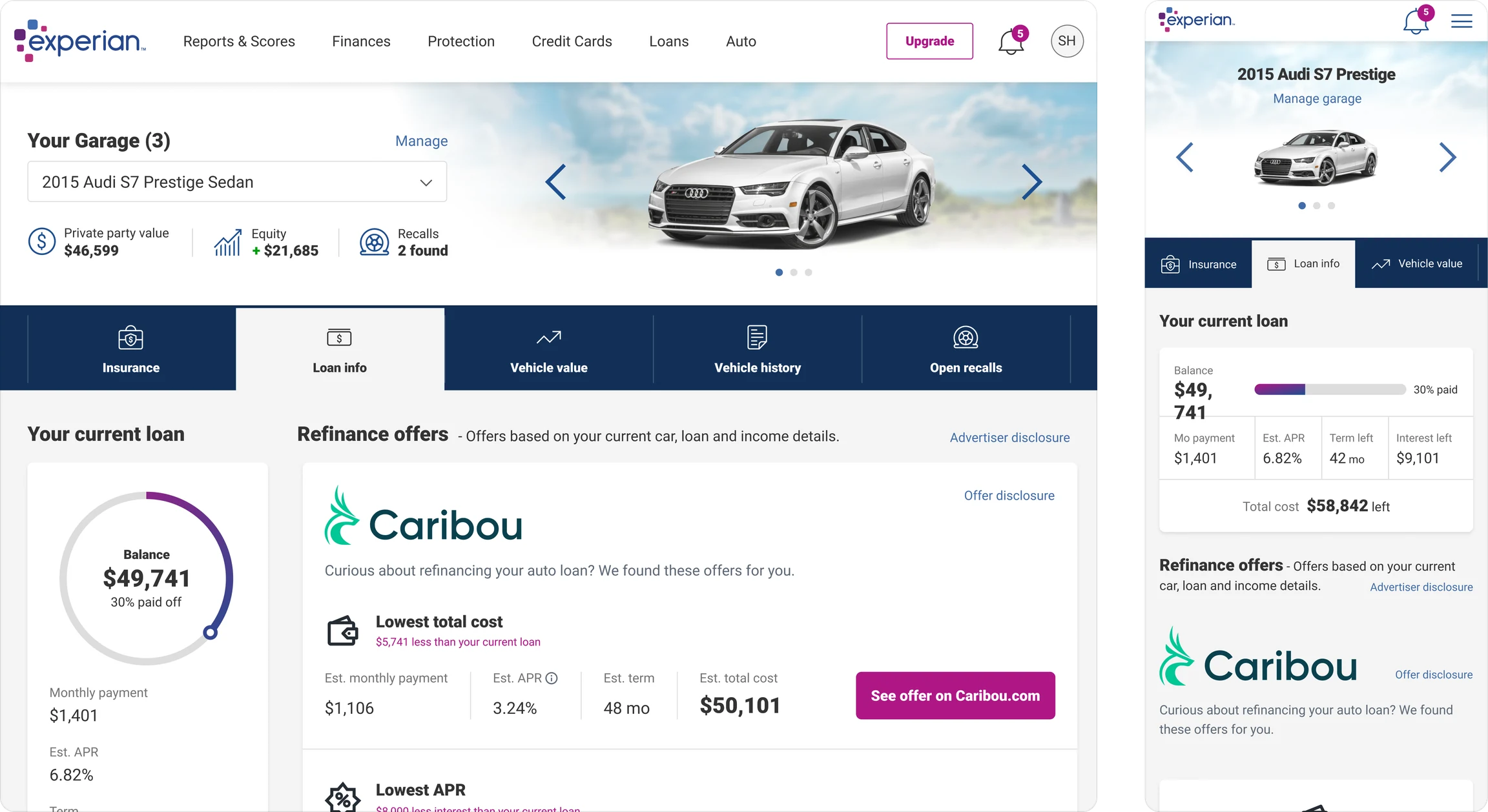
Outdated components. Visual inconsistency. A product that looked like it belonged to a previous version of Experian. Everyone could see it.
- 02
The hidden cost
Every feature built on the legacy code inherited its constraints. Engineering paid for it on every release.
The negotiation
How we got aligned
Engineering
Scrapping live code is significant work, and engineering's resistance was reasonable: was the investment justified?
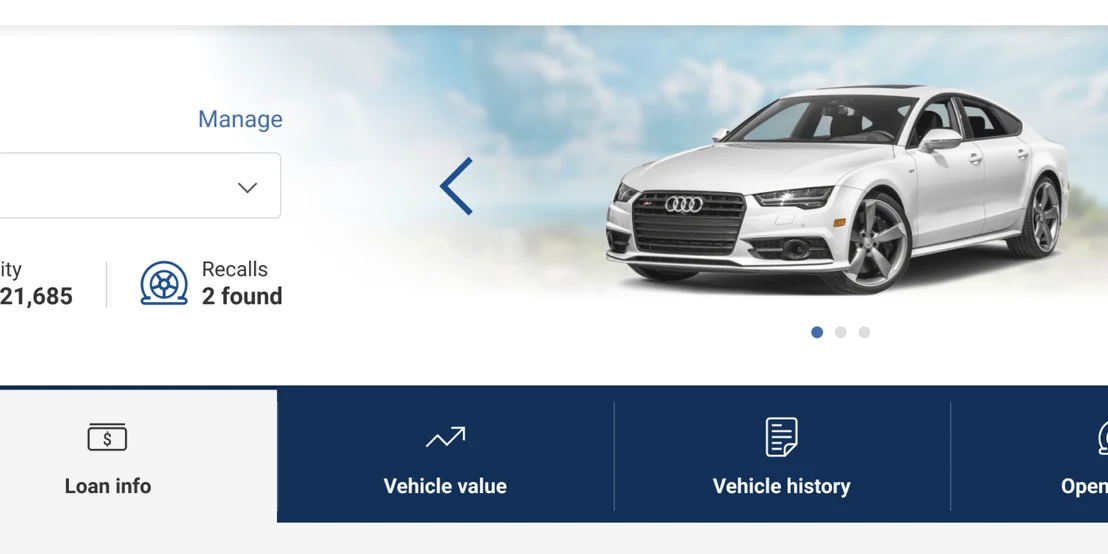
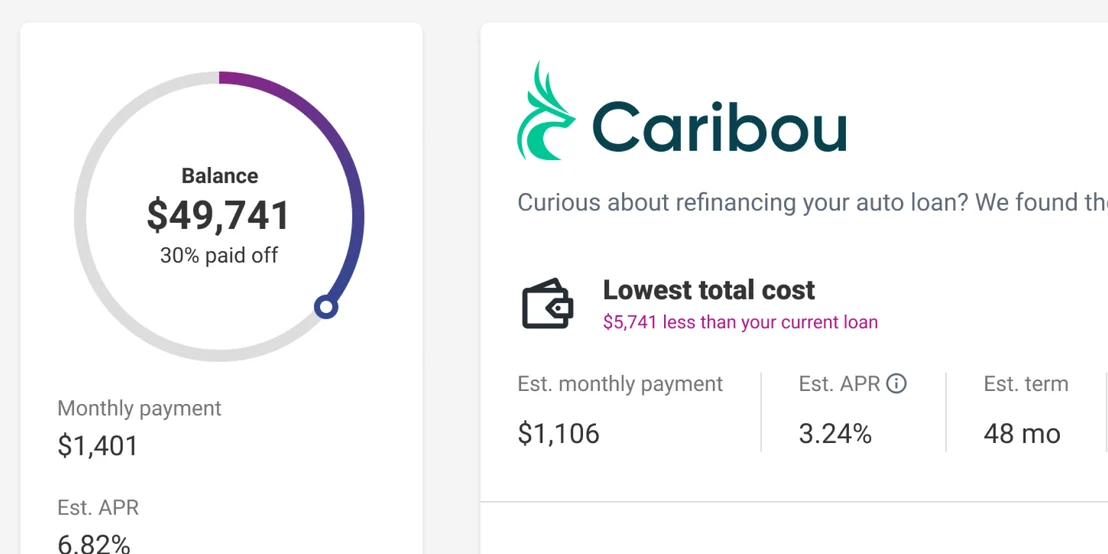
The gap between the legacy components and the current design system was wide enough that a rebuild made more sense than patching. That gave engineering a clean, bounded mandate.
Product
Product's resistance was about priority. The redesign was competing with new features, and maintenance work rarely wins that conversation.
What unlocked it was a goal both teams already shared: building quickly on a product that looked current. The redesign was the work that made that possible, and that earned it a place on the roadmap.
“Rather than framing the redesign as a new cost, I reframed the legacy version as the cost already being paid.”
The redesign
Before & after
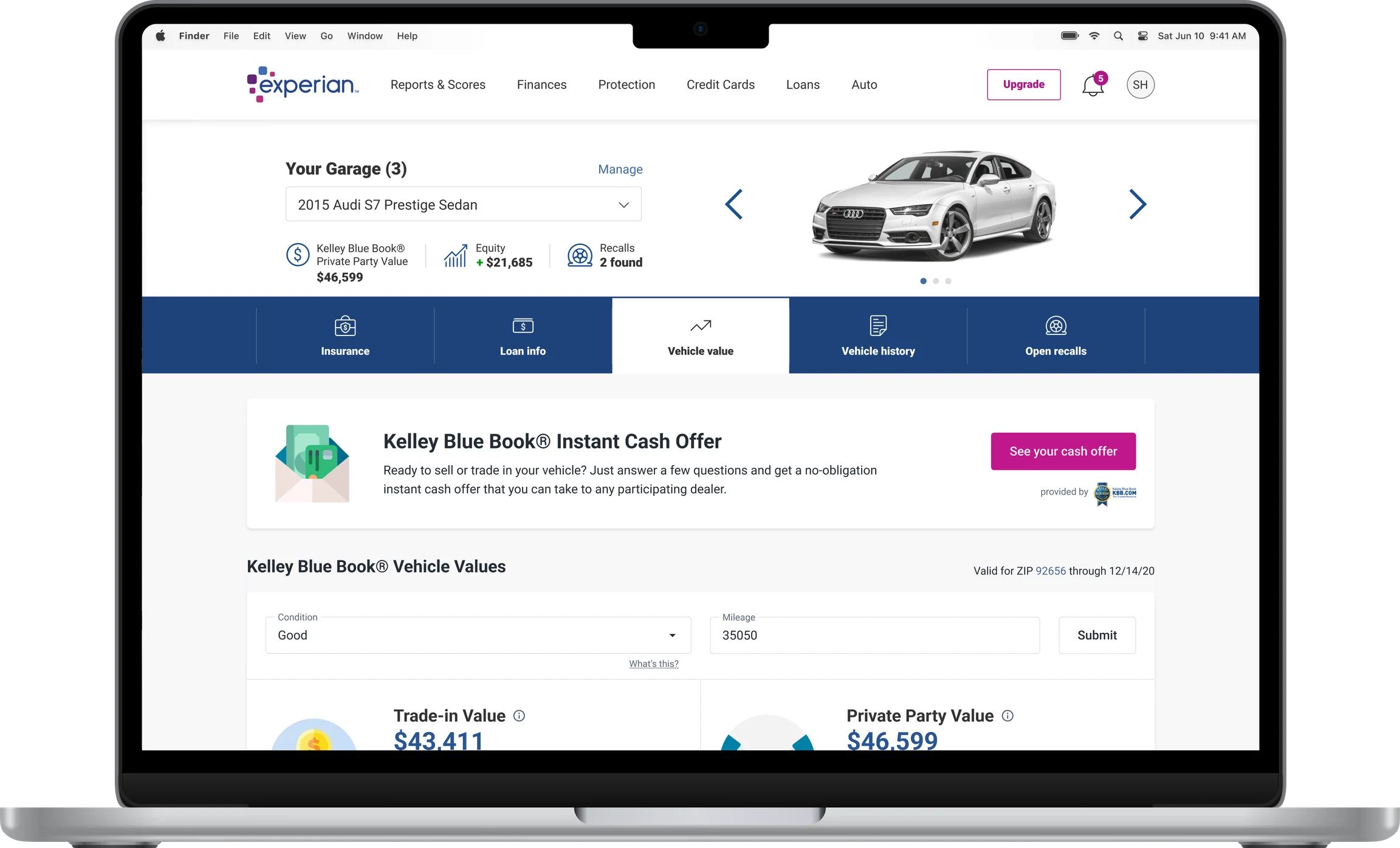
The design decisions
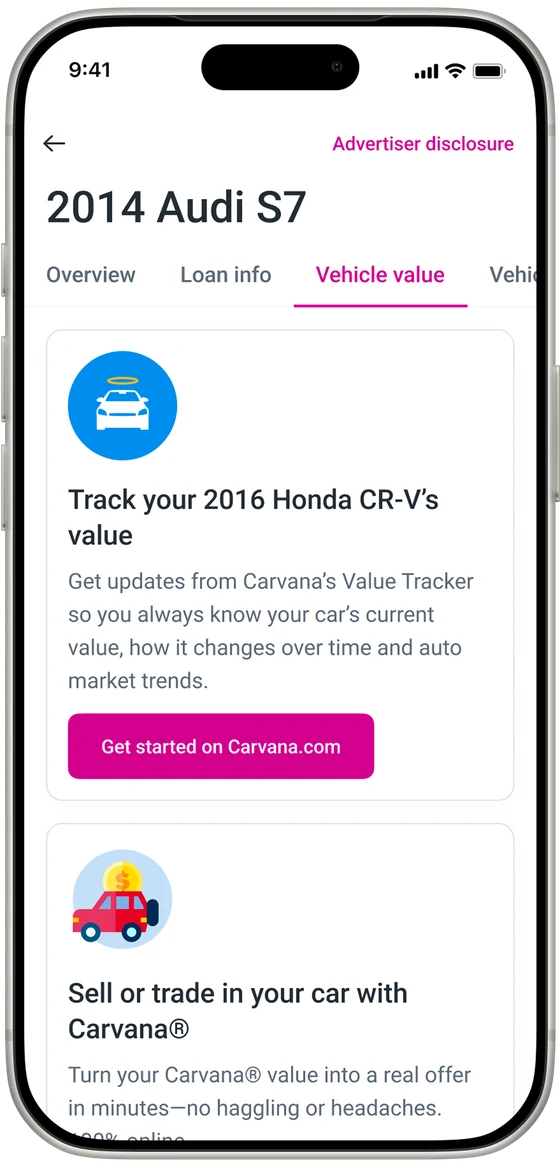
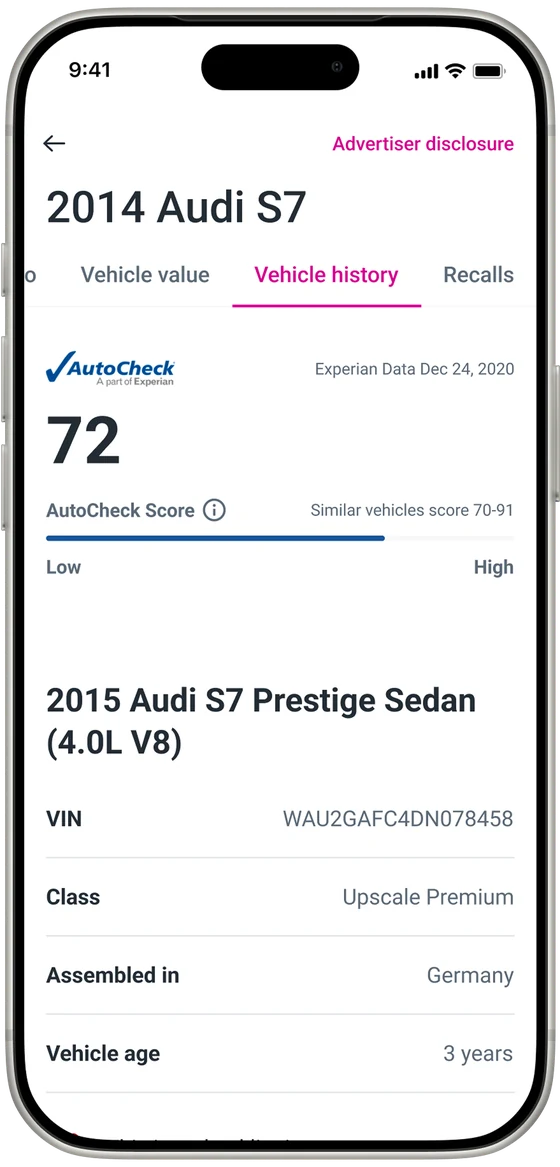
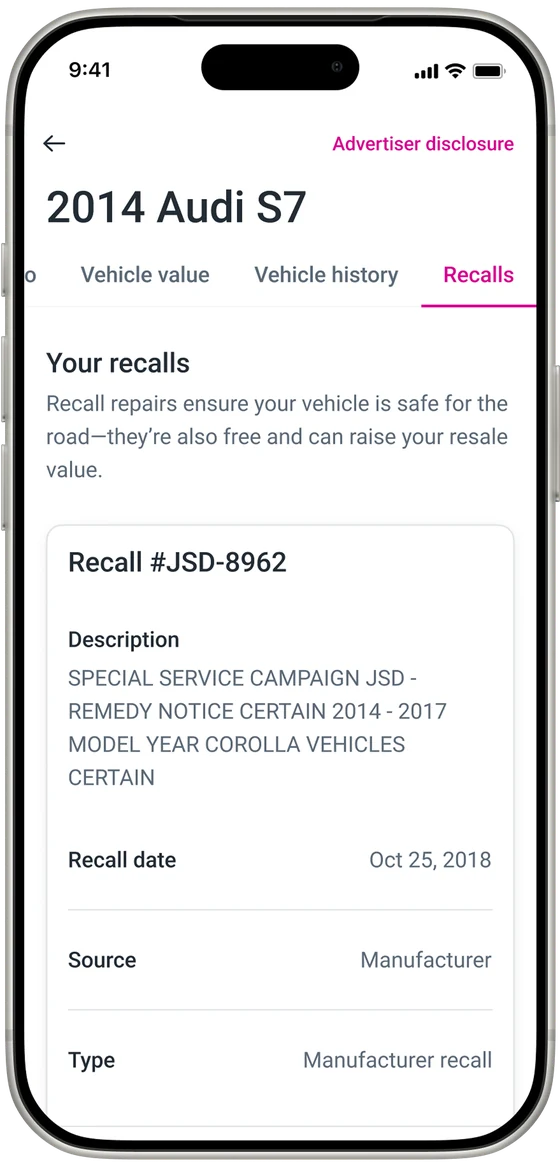
Three decisions shaped the rebuild. UX research tested the designs with users as they took shape, which kept the work pointed the right way.
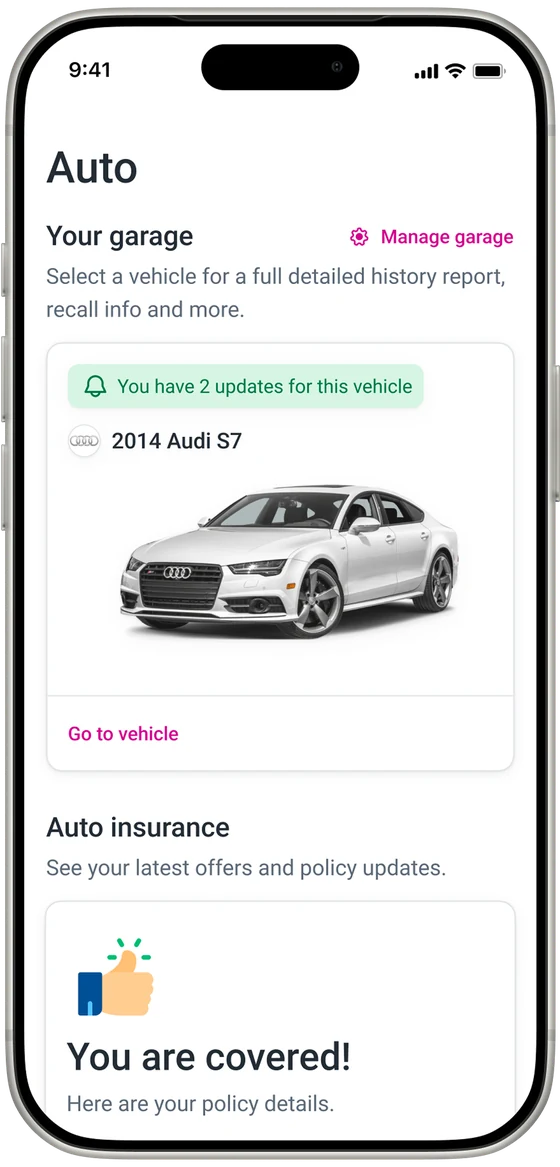
- 01 · Garage
Every vehicle at a glance
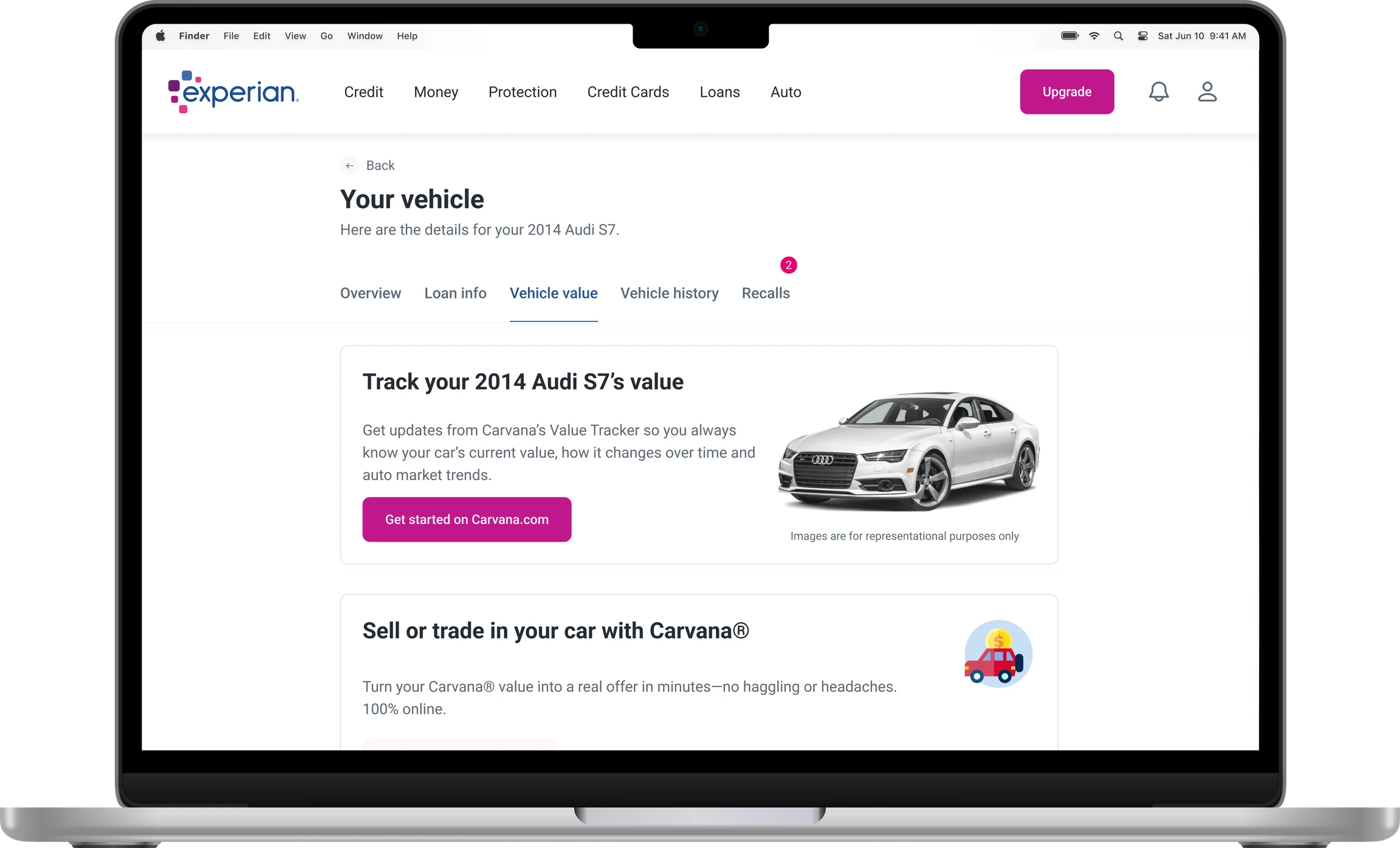
The legacy garage showed one vehicle at a time. The redesign turned it into a high-level view of every vehicle, built for people with more than one.
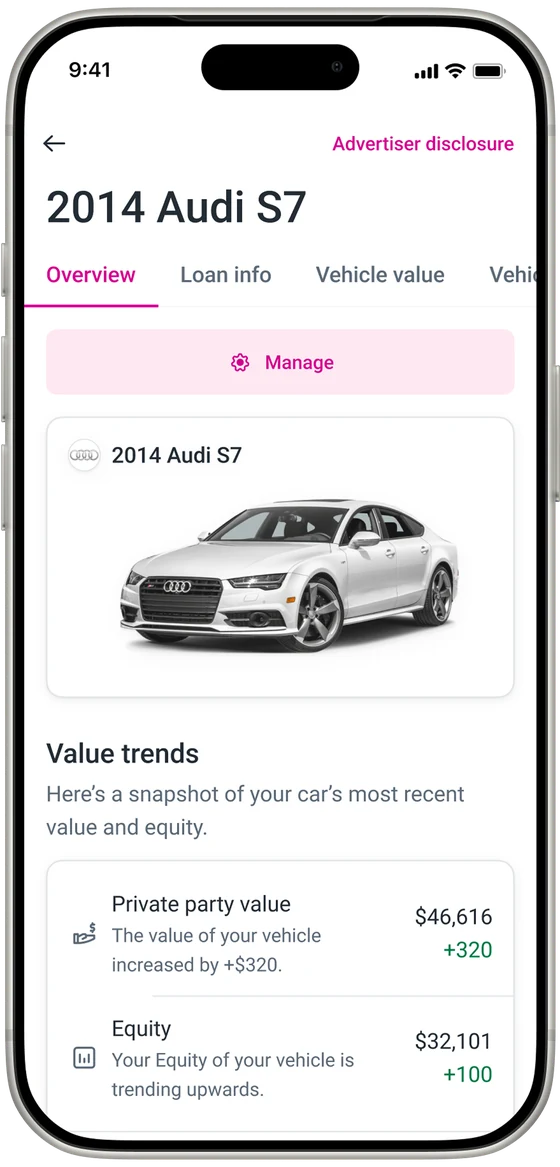
- 02 · Header
Content leads
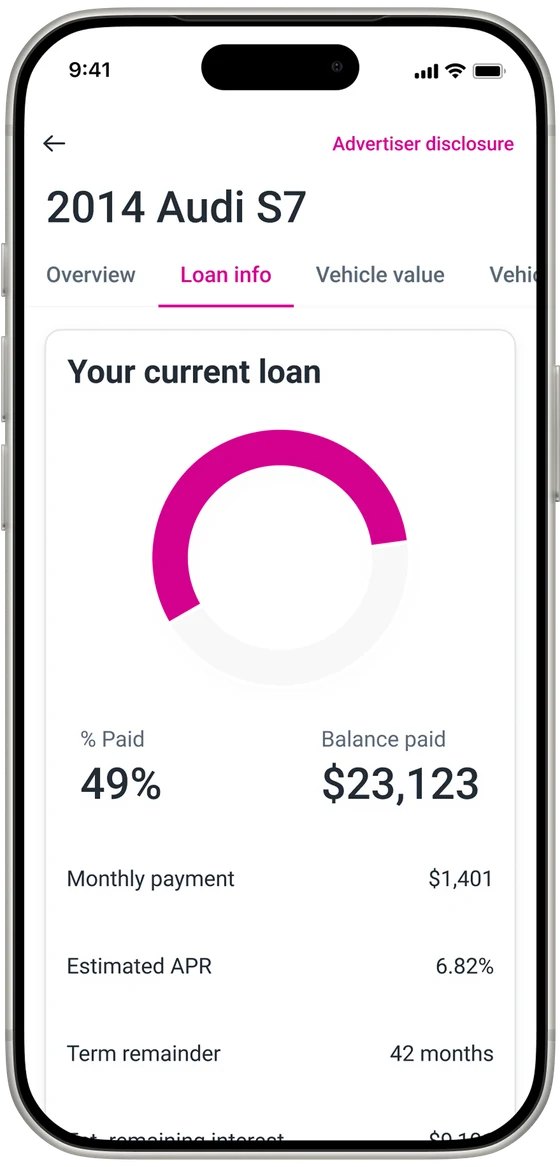
A compact vehicle header replaced the legacy banner, so each tab opens on its content: loan, value, history or recalls.
- 03 · Components
System, not custom
Design-system components replaced the custom ones, so a change made once applies everywhere.
The effort
Designed before it was prioritized
- Q3 2023Design begins
- Early 2024Prioritized — reframe approved
- Aug 28, 202450% rollout — staged release
- Sep 2024100% release to all users
By September 2024, every Experian user was on the new Auto Hub and the legacy code was retired. Auto no longer needed its own components or its own fixes, and work on it kept pace with the rest of the product. The teams that had resisted the rebuild were the ones who delivered it.
The work nobody owned shipped to everyone.