
Experian2022
Confirm your vehicle
Designing a trust-first data mechanic that made manual entry the fallback and unlocked personalized insurance offers.
The situation
No vehicle, no offer
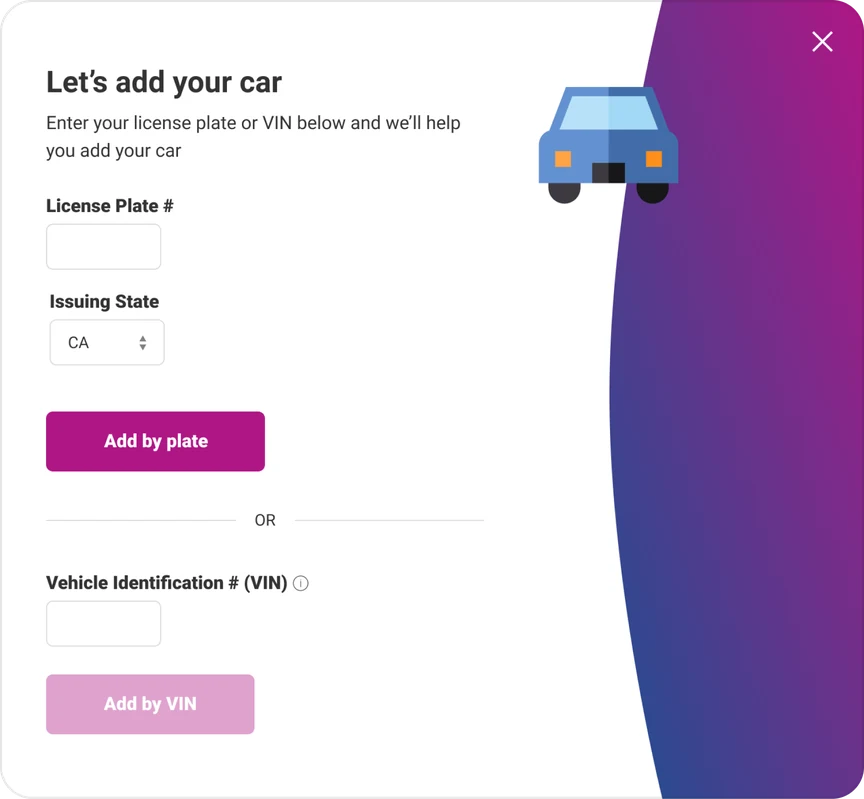
Experian's insurance offers required knowing what vehicles a user owned, and the only way to get that was a manual entry flow that asked for a license plate or a VIN — details most people don't have on hand. Drop-off was predictable, profiles stayed incomplete, and offers couldn't be personalized.
It was a self-reinforcing loop: fewer vehicles in the system meant fewer offers, less value, less reason to complete the flow, and less insurance revenue.
A VP of product brought the original concept to the team: use Experian's existing data to surface what we already knew about a user's vehicles before asking them to confirm anything. I was tasked with figuring out how to make that work.
The scale of the problem
The invisible funnel
~400k
Users had ever manually added a vehicle — across the product's entire history.
vs.
68,207
Users signing up on the insurance funnel in a single week (October 2022).
The gap is what CYC went after: every week, tens of thousands of people entered the insurance funnel, but in the product's whole history only about 400k had ever added a vehicle.
The design challenge
Helpful, not watched
The central tension was trust. Experian already held data on users' vehicles — but surfacing that data unprompted could feel helpful or surveillance-adjacent depending entirely on how it was framed.
The solution was deliberate: surface just enough to make the value exchange feel worth it. We found that balance with UX research, testing how much to show while benefits were locked and how much to open up once users confirmed, and with content design, who shaped how each screen framed the ask.
“Lead with what confirming would unlock, not what we already knew. When the tradeoff was clearly in the user's favor, they confirmed.”
How it worked
The value exchange
- 01
What we surfaced
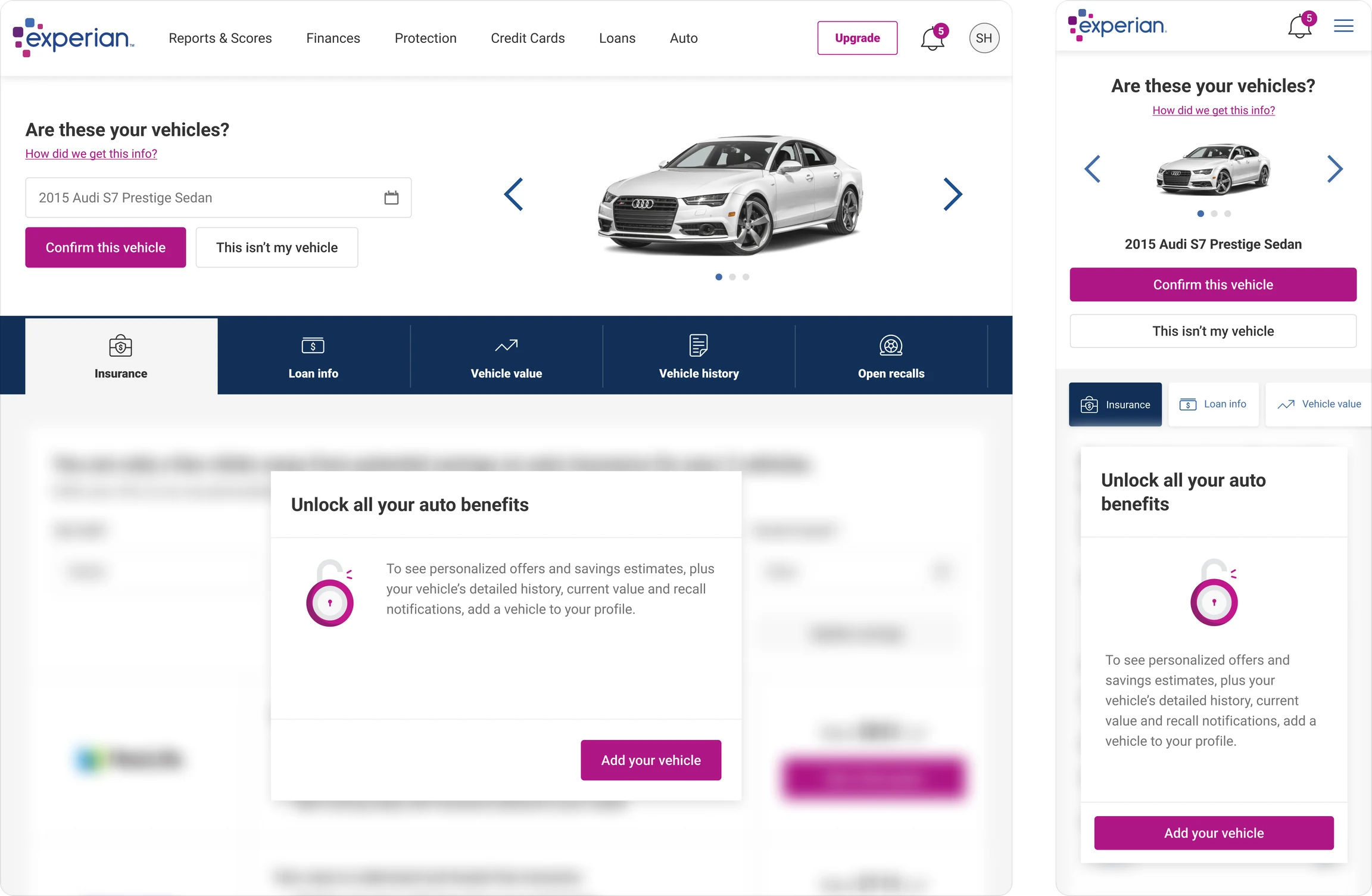
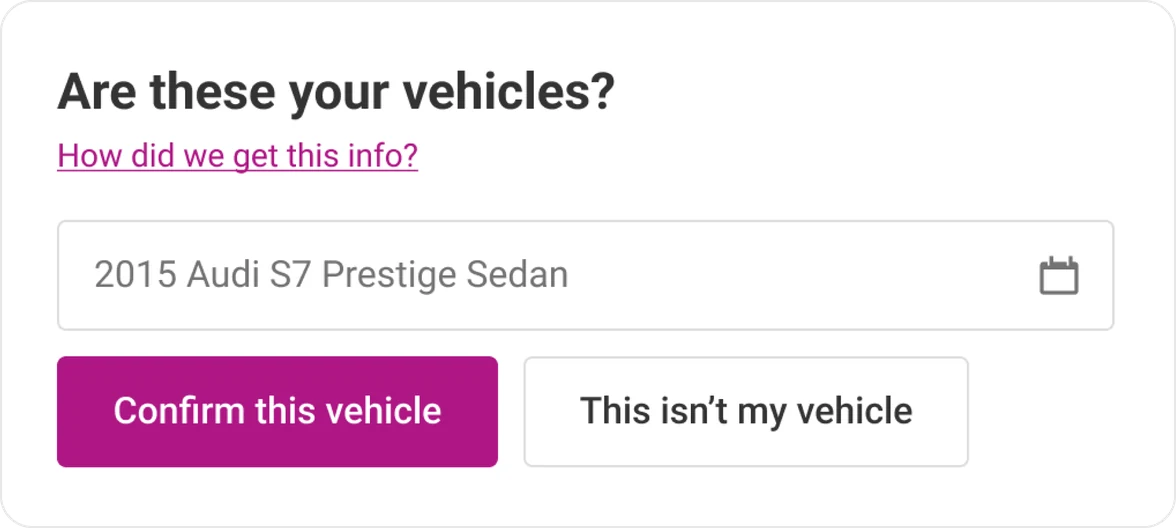
Experian's existing data matched to the user's profile — likely vehicles displayed as best guesses. No plate or VIN required. “Are these your vehicles?”
- 02
How we framed it
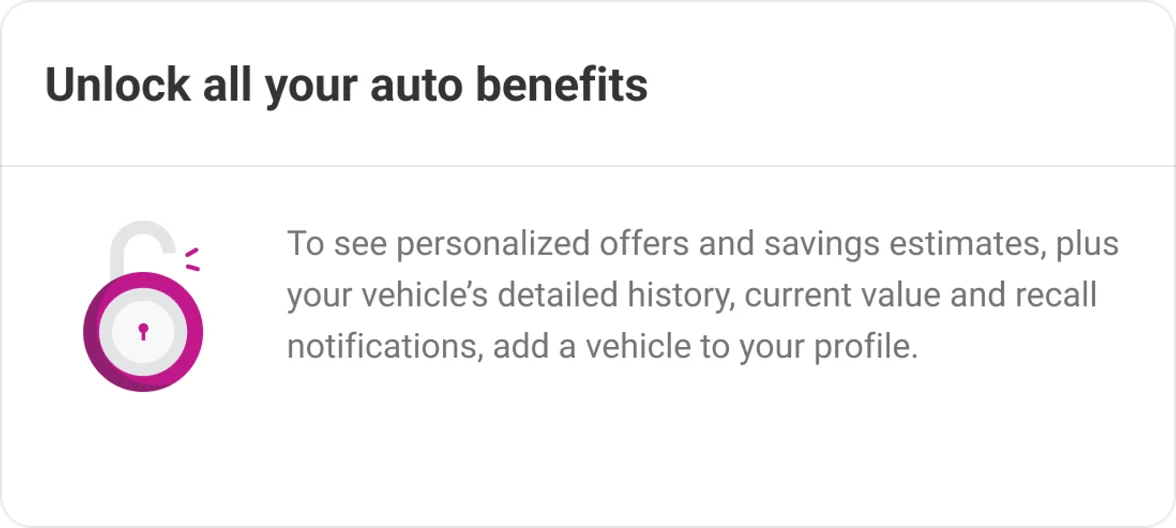
Before confirming, users saw what a confirmed vehicle would unlock. The benefit was visible before the ask — not after.
- 03
What users unlocked
Personalized insurance offers, auto refi quotes, and vehicle-specific insights — all gated on having a confirmed vehicle.
Results · July–October 2022
What it moved
- 8.5M
- Members with vehicle data surfaced
- 3×
- More likely to engage with an auto refi offer
- +40%
- Policies sold per 100k customers
- 293k
- Members confirmed a vehicle
- 15%
- Went straight to an insurance application after confirming
- +27%
- Signup-to-sold, once CYC users could skip the funnel's vehicle screens
Insurance shopping funnel · Growth over time
Weekly policies sold grew from 656 to more than 1,000 after CYC launched, peaking at 1,218, while projected signup-to-sold conversion climbed above 2%.
Chart loads when online.
Data from an internal Pod Update presentation, October 19, 2022. Six weekly conversion values without printed labels were read from the chart axis.
After the Auto Hub redesign
Carried into the redesign
When Auto Hub was redesigned, we redesigned CYC to fit it. The value exchange carried over: lead with the benefit, surface a best guess, then ask.
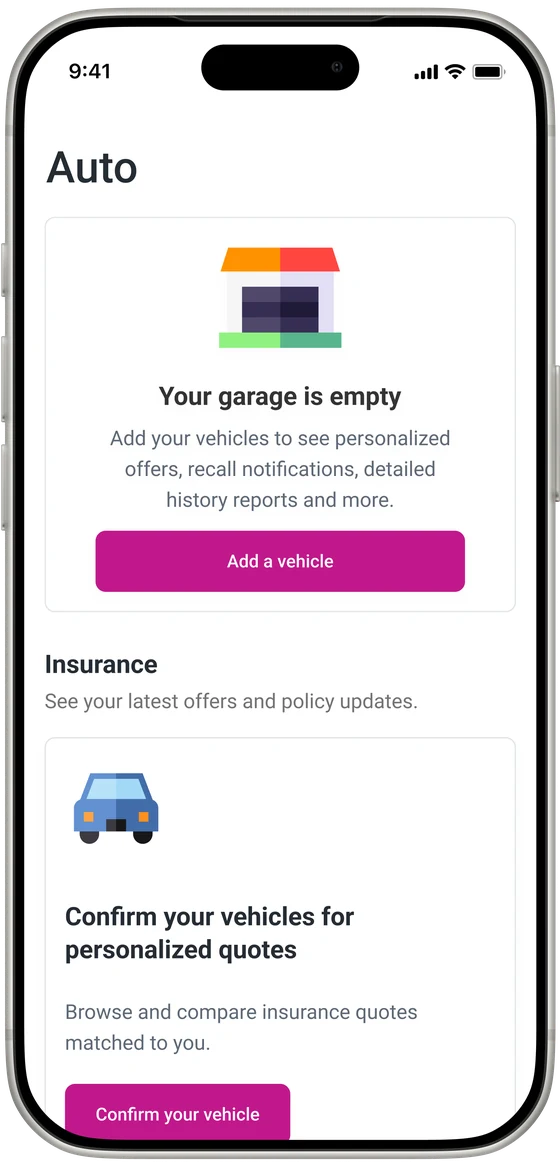
01 · Benefit first 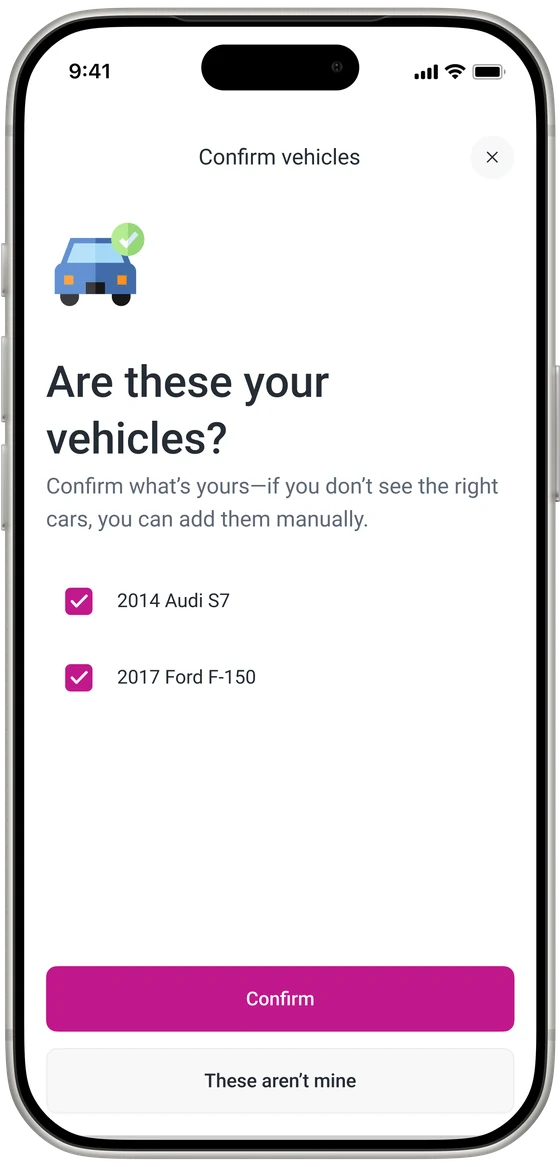
02 · Best guess, confirmed 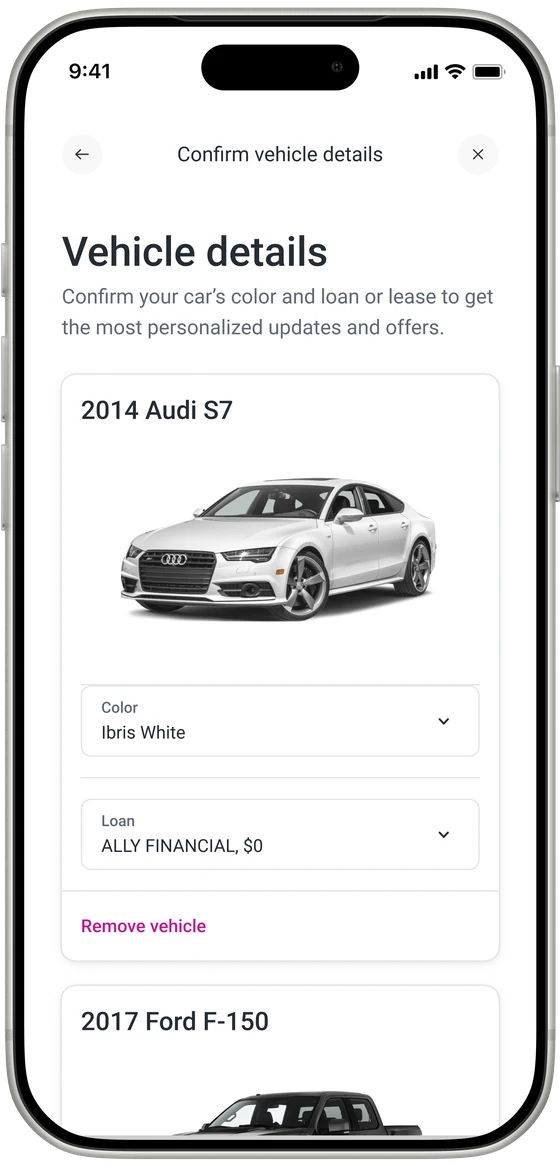
03 · Details added 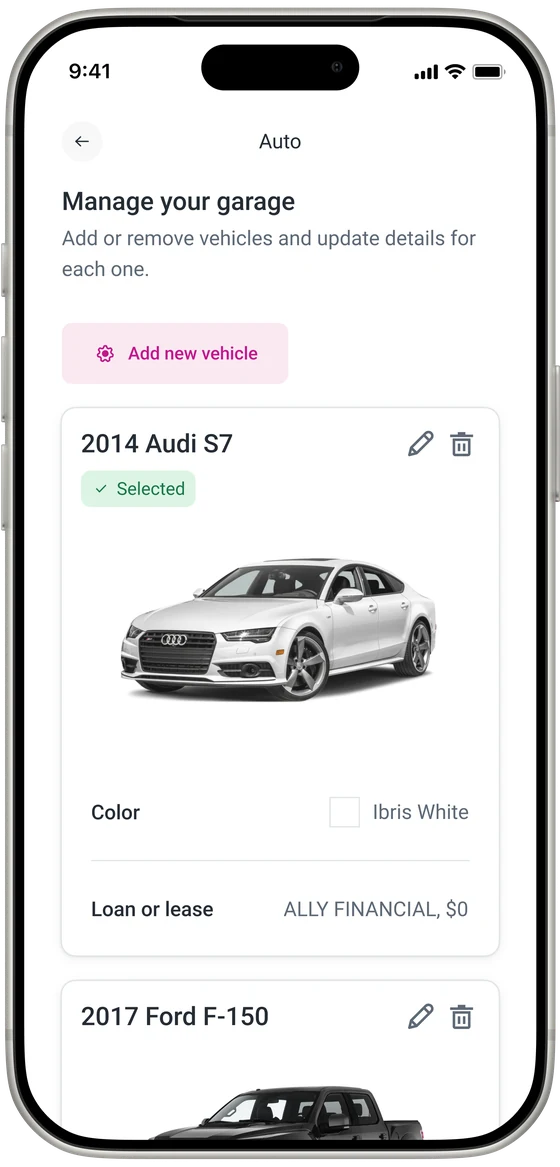
04 · Garage managed 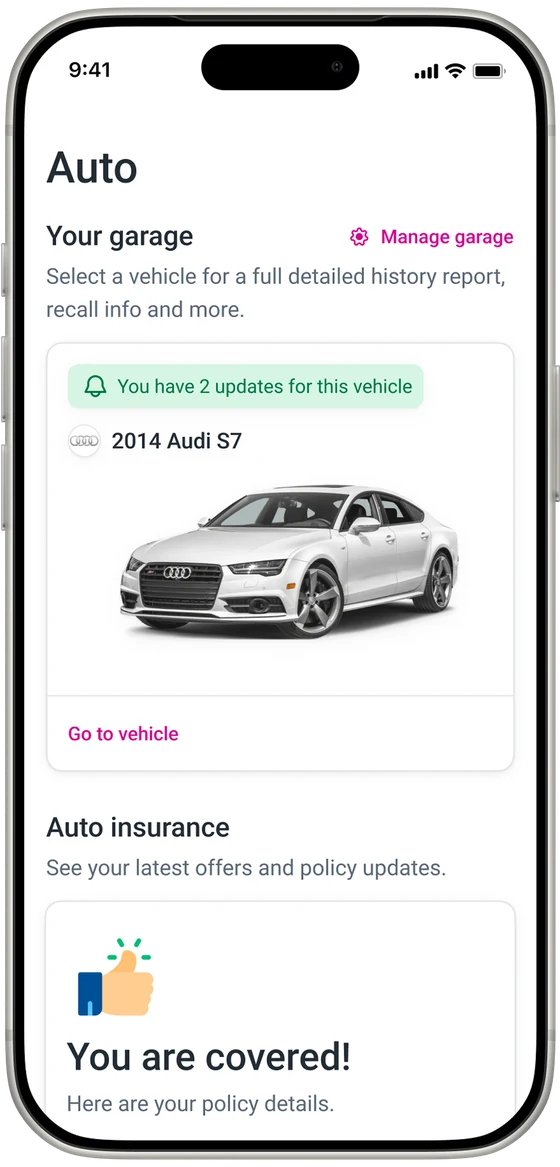
05 · Garage ready 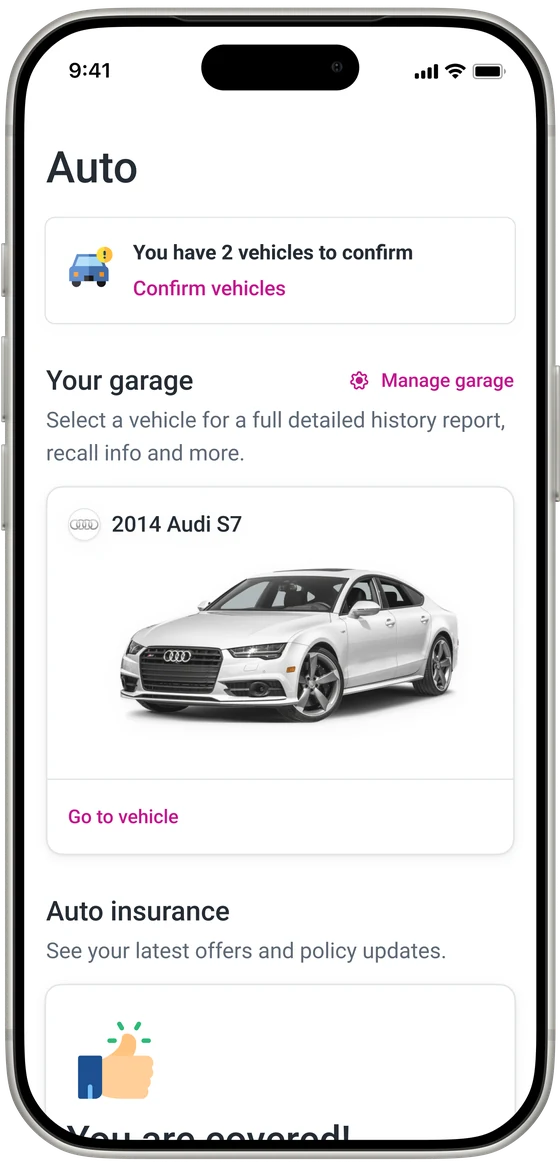
06 · Later: new vehicles detected